


This guide covers everything you need to know: where momos come from, how they are made, what goes inside them, and what makes them different from other dumplings you might already love.
The Short Answer: What Are Momos?
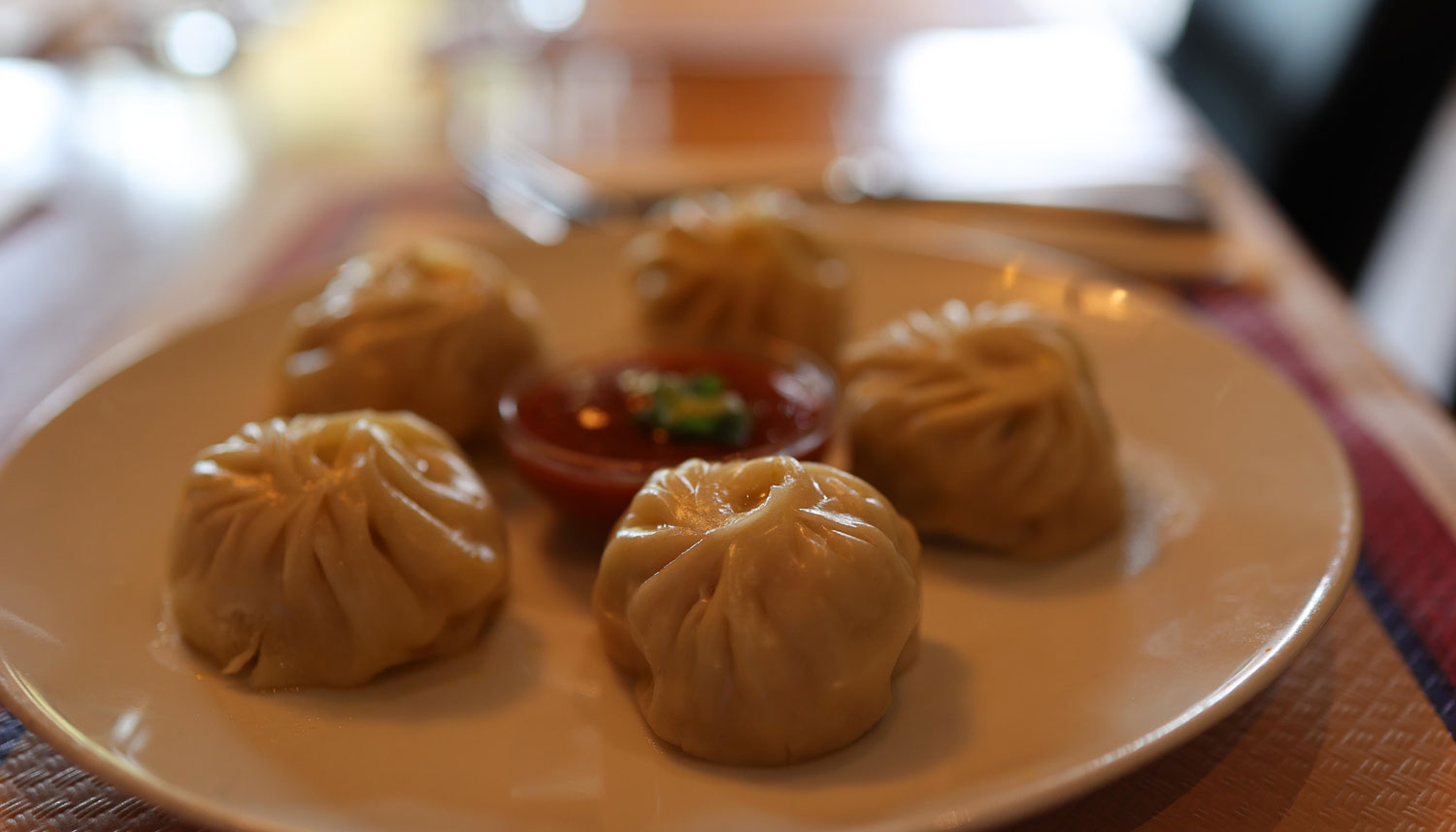
Nepalese dumplings, that's what momos really are at heart — tiny parcels built from a dough so simple it's just flour and water, then packed with seasoned meat or vegetables and cooked off by steaming, frying, or simmering in broth. And they never travel alone; achar, that tangy tomato chutney, is basically part of the package.
Nepal's own answer to the dumpling, you could say — small enough to knock back in a bite or two, carrying all that flavour from fresh ginger, garlic, cumin, and cilantro, and honestly, they're at their best eaten hot, straight off the steamer.
A Brief History: Where Do Momos Come From?
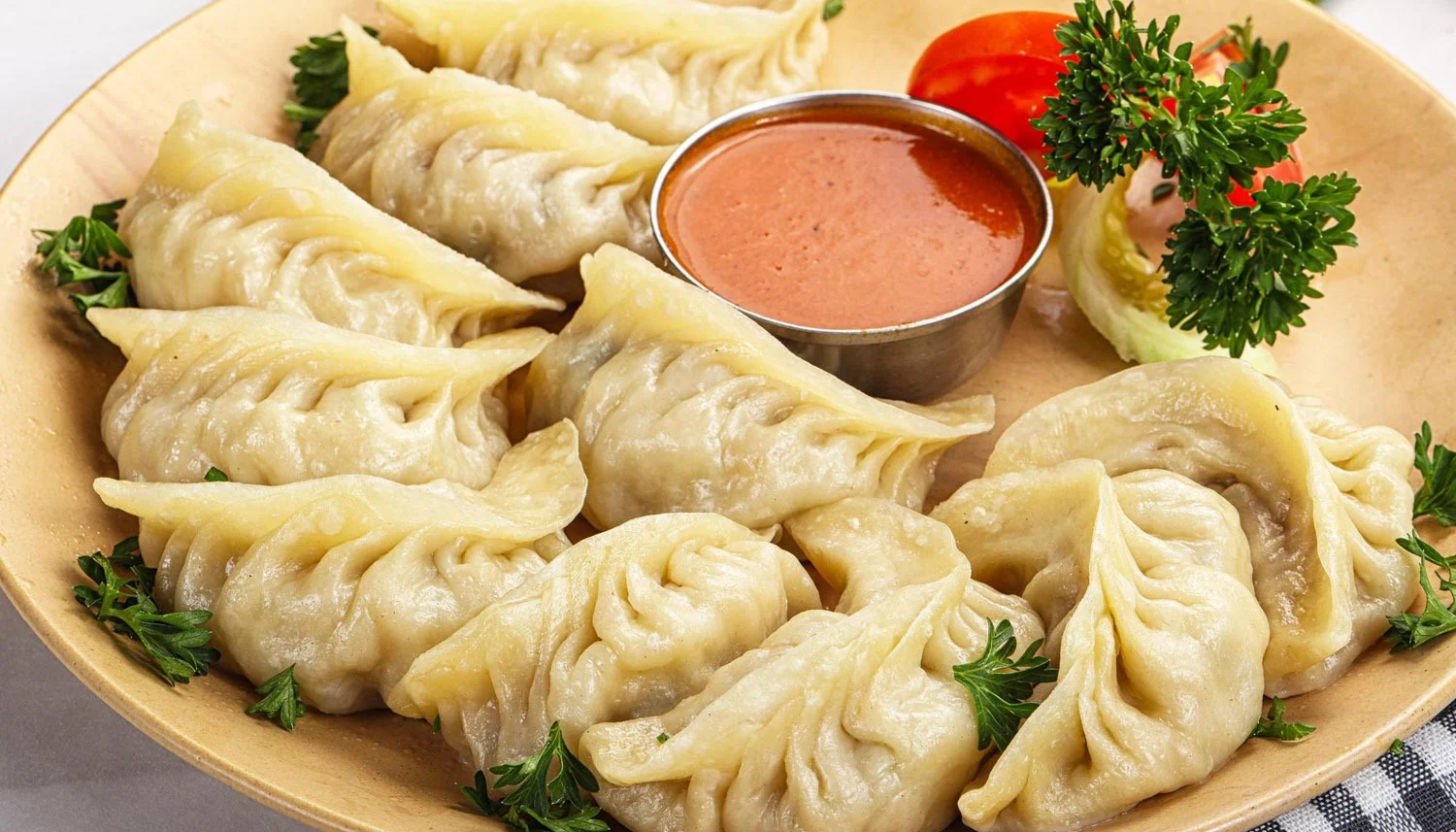
The history of the momos begins in the Kathmandu Valley, home to Tibetan and Newari tribes. The story goes that the Newar traders, while traveling into Tibet before momos were ever a thing sat down to fill dumplings with whatever they could find along their journey and adjusted it here at home based on what was available and what appealed to local palates. That is how we used to only eat the dish, mainly prepared in Newari kitchens, became formed into a plate we consume every freaking day of our lives in Nepal.
Walk down almost any street in Kathmandu, Pokhara, or the Terai today, and you'll spot a momo vendor somewhere close by. They are everywhere you could look — roadside carts, home kitchens, haute cuisine restaurants, festival stalls, and so on. There's also a social side to momos that makes them special — in Nepal, it's common for families to carve out a weekend afternoon, sit down together, and fold dumplings by hand until there's a whole pile of them ready to go.
From Nepal, momos spread to India (especially Darjeeling, Sikkim, and the northeastern states), and in recent decades they have gained a dedicated following in cities across Europe, North America, and beyond.
What Makes a Momo a Momo?
Talk to anyone who's genuinely eaten a proper momo, and they'll point to three things that make it stand out.
First up is the dough. It's just flour and water; you mix it up and roll it out. No eggs, no baking powder, and none of the folding or layering found in other pastry traditions. You pull it out so thin, so thin that it is almost translucent, but you mustn't stretch it too far, or else it'll tear as soon as you try to fill her up. This balance takes time — and a fair few ruined batches along the way. Sure, anyone can roll out a flat circle of dough; creating the right shape that maintains its integrity while remaining tender and fragile requires another level of mastery.
Then the filling, and this is where momos kind of come into themselves. Set them next to Chinese or Japanese gyoza, and you'll notice Nepalese momos aren't spiced anything alike. There's fresh ginger, garlic, cumin, and turmeric going in, along with a generous fistful of cilantro, and some cooks throw in just a pinch of timur — that Sichuan pepper known for the tingle it leaves on your tongue. What comes out tastes worlds away from the soy-and-sesame notes you'd expect from East Asian dumplings — warmer, more fragrant, and much closer to those herb-heavy South Asian flavours.
The chutney. Honestly, you can't have a conversation about momos without bringing up the sauce that goes with them. Tomato achar is the classic — tomatoes roasted down until soft, then ground up with chillies, garlic, timur, and often a spoonful of sesame seeds tossed in for good measure. Ask people what stands out from their first momo experience, and nine times out of ten, it's this chutney they bring up first. There's heat in it, there's zing, and running underneath both is a depth that pulls the whole bite together.
Common Types of Momo
Momos are wonderfully versatile. Here are the most popular varieties you will encounter:
By filling:- Chicken momo — Across Nepal, this is the one people reach for without a second thought — the default order, more or less. Minced chicken gets tossed together with ginger, garlic, onion, cilantro, and cumin, then wrapped up and steamed through. Step into just about any Nepalese restaurant and chances are this is what lands on your table.
- Buff (buffalo) momo — Buffalo meat shows up so often on Nepali tables that this variety's become a genuine local favourite. Go beyond South Asia and it's a much rarer find, though anyone who's tried it tends to rate that rich, slightly gamey character it adds.
- Vegetable momo — Cabbage, carrots, onion, and leafy greens, chopped fine and mixed through with that same warm spice blend running across the other varieties. Unsurprisingly, this is the one vegetarians and vegans tend to pick.
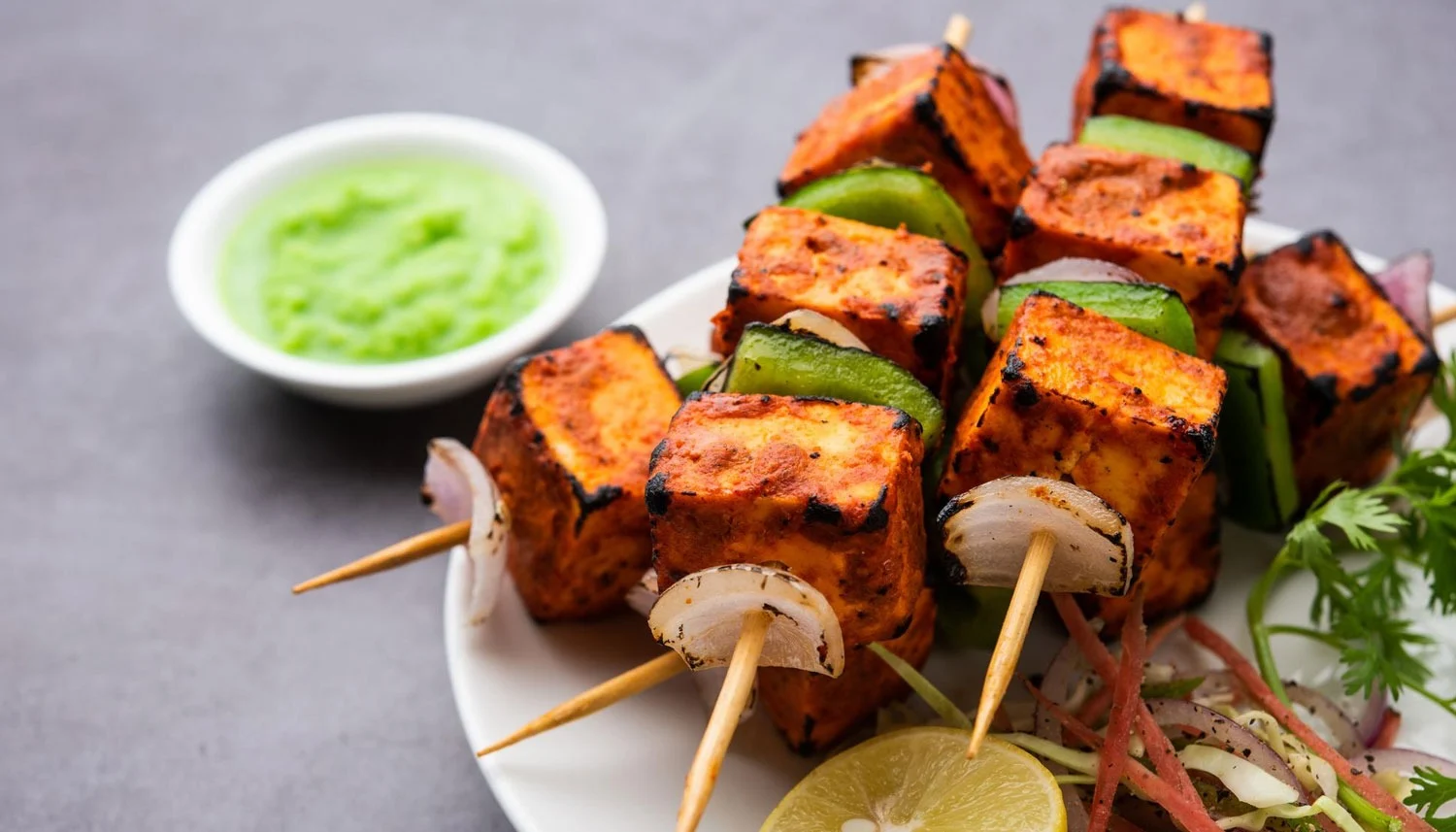
- Paneer momo — stuffed with crumbled paneer and spiced through. A bit of a newer entry on the scene, sitting somewhere between Nepalese tradition and North Indian flavour.
- Pork momo — you'll find this one more in specific pockets of Nepal, particularly among the Newari community, and it also turns up across northeastern India.
- Steamed momo (the classic) — Cooked in a traditional bamboo or metal steamer. The most classic and the most common type. The wrappers remain soft, opaque, and somewhat tacky.
- Fried momo (kothey momo) — It has a unique version of momo named fried momo (kothey momo), which is pan-fried on one side with the bottom golden and crispy while the top remains soft. The equivalent of a Japanese gyoza or Chinese pot sticker.
- Deep-fried momo — Fully submerged in hot oil until crunchy all over. Often served as a snack or appetizer.
- Jhol momo — Served stuffed in a steamed round dumpling, jhol momo are dunked into a hot, spicy, and sour broth often made from tomatoes, sesame seeds, timur (the Nepalese variety of Sichuan pepper), and dried chillies simmered together. The real deal street food of Kathmandu that people turn to when the temperature drops
- Chilli momo (C-momo) — Steamed or fried momos get tossed straight into a hot wok along with onions, bell peppers, soy sauce, and no shortage of chilli. What comes out is bold and saucy, with that sweet-savoury edge younger crowds in Nepal absolutely love.
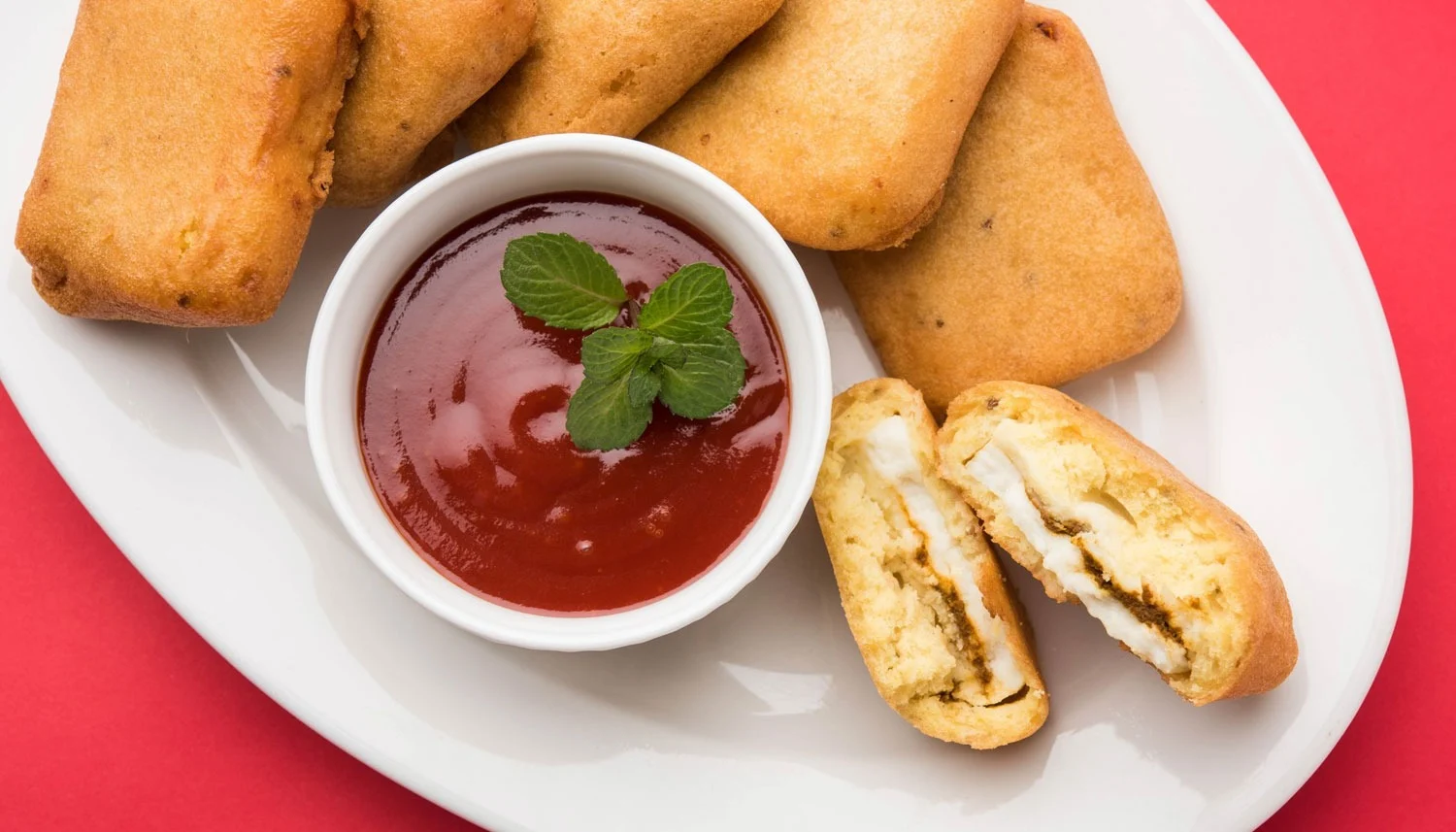
Momo vs. Other Dumplings: What Is the Difference?
Strip it down, and all dumplings share the same basic idea — dough wrapped around a filling — yet the flavour, shape, and sauce shift dramatically depending on where in the world you're eating.
Momo vs. Chinese jiaozi: Jiaozi wrappers often have egg worked into the dough, giving them a texture that's naturally heftier than anything a momo skin can offer. The inside is filled primarily with pork, napa cabbage and fresh chives, all lightly doused in soy with a dash of sesame oil. Momos, in fact, go in an entirely different direction — no egg here as the wrapper is thin and flavour comes from ginger (tick), cumin (tick), coriander (tick) and turmeric instead. There was very little crossover here between these 2 flavour worlds.
Momo vs. Japanese gyoza: Gyoza and jiaozi are very closely related, but gyoza is usually fried in a pan and served with a soy vinegar dip. Momos run a slightly different course, being steamed most of the time and served with that fiery tomato-chilli chutney which has become almost synonymous with momos.
Momo vs. Korean mandu: Mandu often bring tofu, glass noodles, and kimchi into the mix. The wrapper and cooking style aren't too far off from other dumplings, but the seasoning and sides give it away as distinctly Korean.
Momos vs. Indian samosa: Different category, though they feel like distant cousins. Momos use thin, unleavened dough and get steamed; samosas take a thicker shell and go deep-fried. Fillings split too — potato and pea for samosas, minced meat or fresh vegetables for momos.
In short, momos are part of the global dumpling family, but their Nepalese spice palette and signature tomato chutney give them a flavour that is entirely their own.
Momo Sauces and Chutneys
No plate of momos is complete without a dipping sauce. Here are the most common:
- Tomato achar — the one nobody argues with. Tomatoes take a turn over the fire first, then get pounded together with dried red chillies, garlic, salt, and timur until it's a spicy, coarse paste. Go looking for a momo stall or restaurant in Nepal that leaves this off the table — you won't find one.
- Sesame(til) chutney — Roasted sesame seeds ground with chillies, garlic and lemon zest result in a nutty, spicy and aromatic treat.
- Cilantro (coriander) chutney — a sauce so green you could make glow-in-the-dark paint (fresh coriander blended with green chillies and lemon juice. More refined and less overtly aromatic than the others on this list, which makes it a perfect complement to meatier, creamier fillings.
- Jhol (soup) sauce — the thin, spiced broth jhol momo sits in, sometimes served on the side too, for dunking plain steamed momos.
At restaurants outside Nepal, you may also find momos served with mint chutney, tamarind sauce, or yoghurt-based raita—all of which complement the dumplings well.
How Momos Are Traditionally Eaten
Eating momos in Nepal is a casual, communal thing, plain and simple. The plate comes out steaming hot, chutney bowl right there next to it. You grab a momo with your fingers or a fork, dunk it well, and it's gone in a bite or two. No real etiquette to worry about — just good food, shared among good company.
Most of the time, momos work as a snack or a starter, though a generous plate of eight to twelve pieces, with chutney and maybe a side of broth, can easily hold its own as a full meal.
Where to Find Authentic Nepalese Momos in Amsterdam
Amsterdam's been warming up to Nepalese food lately, and more often than not, it's momos that get people asking questions and wanting to try more. Based in Amsterdam Noord and curious about handmade Nepalese dumplings? Mt Everest Tandoori has you covered, with steamed chicken momo and steamed vegetable momo both featured on their menu. Each one gets stuffed by hand with a mix of aromatic Nepalese herbs, prepared by the restaurant's own Nepalese chef.
Worth exploring the rest of their Nepalese kitchen section too, which covers dishes like chhoyalla (spiced, sautéed meat), Nepalese fried rice, chow mein, and chicken chilli — a broader taste of Nepal beyond just the momos.
Mt Everest Tandoori sits in the Vogelbuurt, Amsterdam Noord, roughly a ten-minute metro ride from Centraal. Open all seven days for dine-in, takeaway, and delivery, with both table reservations and online ordering handled straight through their website.
Tips for Ordering Momos If It Is Your First Time
If you have never tried momos before, a few pointers:
Best to start with steamed chicken momos — the most traditional pick, and a solid first taste of what momos are all about. Going plant-based? Vegetable momos are the way to go.
And don't skip the chutney. It's genuinely half the experience. If you like things spicy, it's worth asking whether the restaurant makes its own Nepali chutney to go with the momos.
Pair momos with a cup of masala tea for an authentically Nepalese combination, or with a cold Gurkha beer if you prefer something refreshing.
Do not be afraid to order momos as a full appetizer course before a curry and naan dinner—they complement a broader Indian and Nepalese meal beautifully.
FAQ Section
(Structured for featured snippets and AI search results — each question as an H3)
Just a fine dough wrapper gives momos that little, savoury tastiness; the filling provides heat of ginger, garlic and cumin with slightly fresh cilantro. Spicy chilli and sour tomato chutney. As opposed to the soy sauce-based flavour of its East Asian counterpart, the signature flavour profile is fragrant and herby.
Experience the Best Restaurant in Amsterdam
Book your table, order online, or explore our catering services for your next event.